
Keep working assets supplied onsite
Designated fuel points can support vessels, service vehicles and equipment without relying on repeated offsite refuelling journeys.
Industry solution
Control fuel issued to workboats, harbour craft, marina fleets and shore-side equipment with authorised dispensing, asset identification and transaction reporting.
Ports and marinas can combine vessels, vehicles, contractors and several fuel points across long operating hours. A practical fuel-management system needs to fit the movement of the site while keeping each transaction attributable to the right user, vessel or asset.
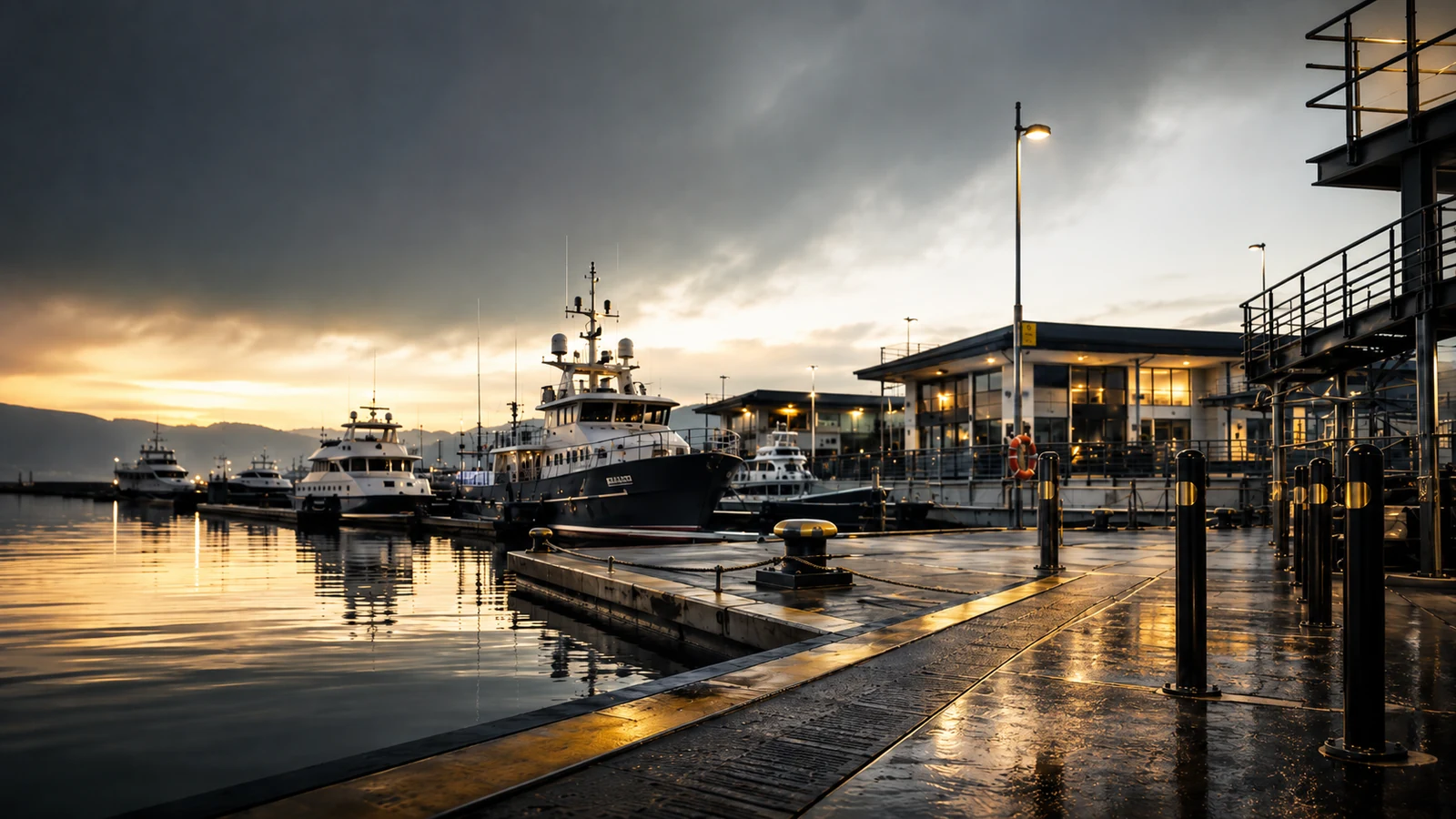
Understanding the operation
A port or marina may need to account for harbour craft, pilot or patrol boats, workboats, maintenance vehicles, forklifts, generators and other operational assets. Different teams can work from separate berths, yards or service areas while drawing from shared storage.
We can provide a controlled process around suitable storage and dispensing equipment so authorised users identify themselves and the asset before fuel is released. The resulting transactions can then be reviewed centrally by vessel, vehicle, department, contractor, location or reporting group.
Benefits for ports and marinas
Where the storage and dispensing arrangement is suitable, connected fuel management can replace shared keys and manual logs with a controlled transaction record that follows the user, vessel or asset.
Designated fuel points can support vessels, service vehicles and equipment without relying on repeated offsite refuelling journeys.
Transactions can be associated with configured vessels, vehicles, equipment, users and operating groups rather than remaining as an unexplained pump total.
Authorised access and reporting groups help distinguish activity where marina staff, harbour teams, contractors or separate operating companies share infrastructure.
Tank information and transaction history can support replenishment planning and help responsible teams investigate unusual movement.
Typical operational problems
A marine site can have very different asset types and consumption patterns. The reporting structure needs to keep vessel, vehicle, equipment and user records clear without making the refuelling process unnecessarily complicated.
Berths, pontoons, yards and service areas may not sit beside the same tank or dispenser. The design needs to consider how each point is supplied, identified, connected and reported.
Harbour teams, marina staff, tenant operators and contractors may use the same infrastructure. Permissions and reporting need to reflect who is actually responsible for each transaction.
Coastal weather, salt exposure, communications coverage, lighting and physical access can all affect equipment placement. The live environment needs to be reviewed before hardware is specified.
Day-to-day workflow
The operator presents the approved identification method at the designated fuel point.
The relevant workboat, vessel, vehicle or equipment record is selected or associated using the configured identification process.
The measured quantity is captured with the user, asset, time and fuel-point information supported by the selected configuration.
Operations or management teams can review recorded fuel by vessel, asset, department, contractor, location or reporting period.
Relevant capabilities
Define how harbour teams, marina staff and authorised contractors identify themselves and the vessel or asset receiving fuel. Keep the user, asset and reporting group distinct in the agreed workflow, including where several teams share the same fuel point.
Standalone FT4000 control offers a route for managing suitable existing pumps. Review the tank supply, meter interface and required flow at each location, alongside exposure, protection and access. Equipment suitability must be confirmed for the actual port or marina environment.
TankWatch provides stock, available capacity, delivery and movement information. The tank, probe, local display and communications arrangement determine how that information reaches your replenishment team.
Use consistent vessel, vehicle, equipment and user records to review measured fuel issues across connected locations. Agree the departments, contractors and reporting periods that the operational review needs, with responsibility for maintaining records and investigating exceptions.
Operational value
Complete-system specification
A useful port or marina specification connects dispensing, access control, tank monitoring, reporting and support to the way vessels, vehicles and people actually move through the site.
Which tank supplies each fuel point, which assets use it, and which team is responsible for the recorded fuel?
Can users and service teams reach the equipment in the actual operating conditions, and where must communications be tested?
The project specification must separately address any requirements for retail fuel sales, payment, legal metrology, hazardous areas, marine bunkering or other site-specific regulatory controls.
Implementation approach
Your site enquiry can include a site plan showing which tanks supply each berth, pontoon, yard and shore-side fuel point. Add the vessels and assets served, shared users, delivery routes and practical service access. Record the power, communications and exposure at each location so the equipment and reporting proposal can be checked against the working site.
Recommended next steps
Helpful answers
Yes, where the selected storage, dispensing and identification equipment is suitable. Vessels, workboats, vehicles and other assets can be organised within the reporting structure so transactions remain attributable to the correct user, asset and location.
Connected reporting can be configured across multiple fuel points or sites where the hardware, communications and software are appropriate. Each location should still be assessed for its own flow, access, power and communications requirements.
A vessel can be treated as an asset within the configured identification process. The most suitable method depends on the operating workflow, the selected hardware and how reliably the identifier can be used at the fuel point.
Existing tanks, pumps or meters may be retained where they are compatible, serviceable and suitable for controlled metering. We need to review the installed equipment before integration can be confirmed.
Not necessarily. Retail or resale applications can introduce payment, legal metrology, commercial and site-specific compliance requirements that need to be defined separately. The final design should be based on the exact operating and commercial model.
The actual location, enclosure, power, communications, environmental exposure and protection requirements need to be reviewed during specification. A marine or coastal site should not be treated as equivalent to a sheltered inland depot without that assessment.