
Fueltek case study · Rail
LNER & Hitachi
An operational ownership handover with a clear reporting cut-off.
Responsibility for fuelling sites at Craigentinny and Ferme Park transferred from LNER to Hitachi Rail. The systems had to remain operational while reporting ownership changed at a clearly defined point.
 Sector context image
Project approach
From operational problem to working system.
At Craigentinny and Ferme Park, the project centred on a clear reporting boundary while existing fuelling systems remained operational.
Separate responsibility without interrupting live fuelling
- LNER needed accurate reporting up to the agreed handover point.
- Hitachi needed a clean starting point for subsequent fuel usage and charging.
- The change had to be coordinated while the depots remained operational.
Use existing transaction and stock history to manage the changeover
- Worked with existing Fueltek FT4000 and TankWatch installations already operating at the sites.
- Used transaction and stock throughput history to establish the operational reporting boundary.
- Coordinated access and ownership changes so responsibilities could be apportioned to the correct organisation.
Project in context
The brief, explained in more detail.
The project brought together the equipment and operating processes described below. Explore how the installation worked and the considerations for a similar system at your site.
A reporting handover, not an equipment replacement.
Responsibility for the Craigentinny and Ferme Park fuelling sites transferred from LNER to Hitachi Rail. LNER needed an accurate record up to the agreed handover point, while Hitachi required a clear starting point for subsequent usage and charging.
Fueltek worked with the FT4000 and TankWatch installations already operating at the depots. Existing transaction and stock throughput history provided the information used to establish the reporting boundary. Access and ownership changes were coordinated around that agreed point.
The underlying fuelling operation remained in service as responsibility changed. This case is about the continuity and usefulness of operational records, rather than replacing the depot hardware. The outcome was a defined reporting boundary, with both organisations satisfied with the speed and efficiency of the changeover.
System architecture
How the Fueltek layers worked together.
A fuel-management project normally has several distinct jobs to do: physically store or dispense product, decide who is allowed to use it, measure what is held in storage, and turn activity into information that managers can review. The cards below show the roles of the systems connected with this case study.
FT4000
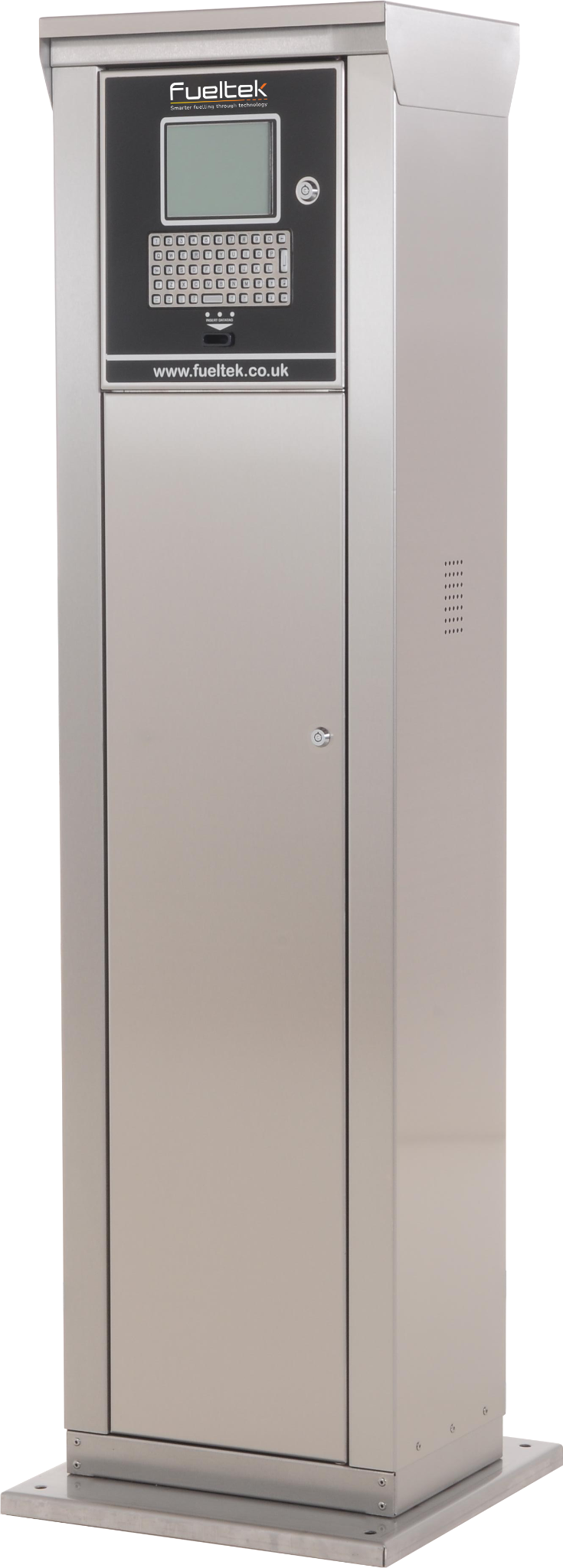
Authorised dispensing and transaction control
The FT4000 is the control layer at the fuelling point. It can be used to authorise dispensing, associate a transaction with an approved user or vehicle and create a structured transaction record instead of leaving the pump as an isolated piece of equipment. Where the project configuration captures additional fields such as mileage or identification data, those details can sit alongside the quantity dispensed so later reporting has operational context.
Explore FT4000 →TankWatch
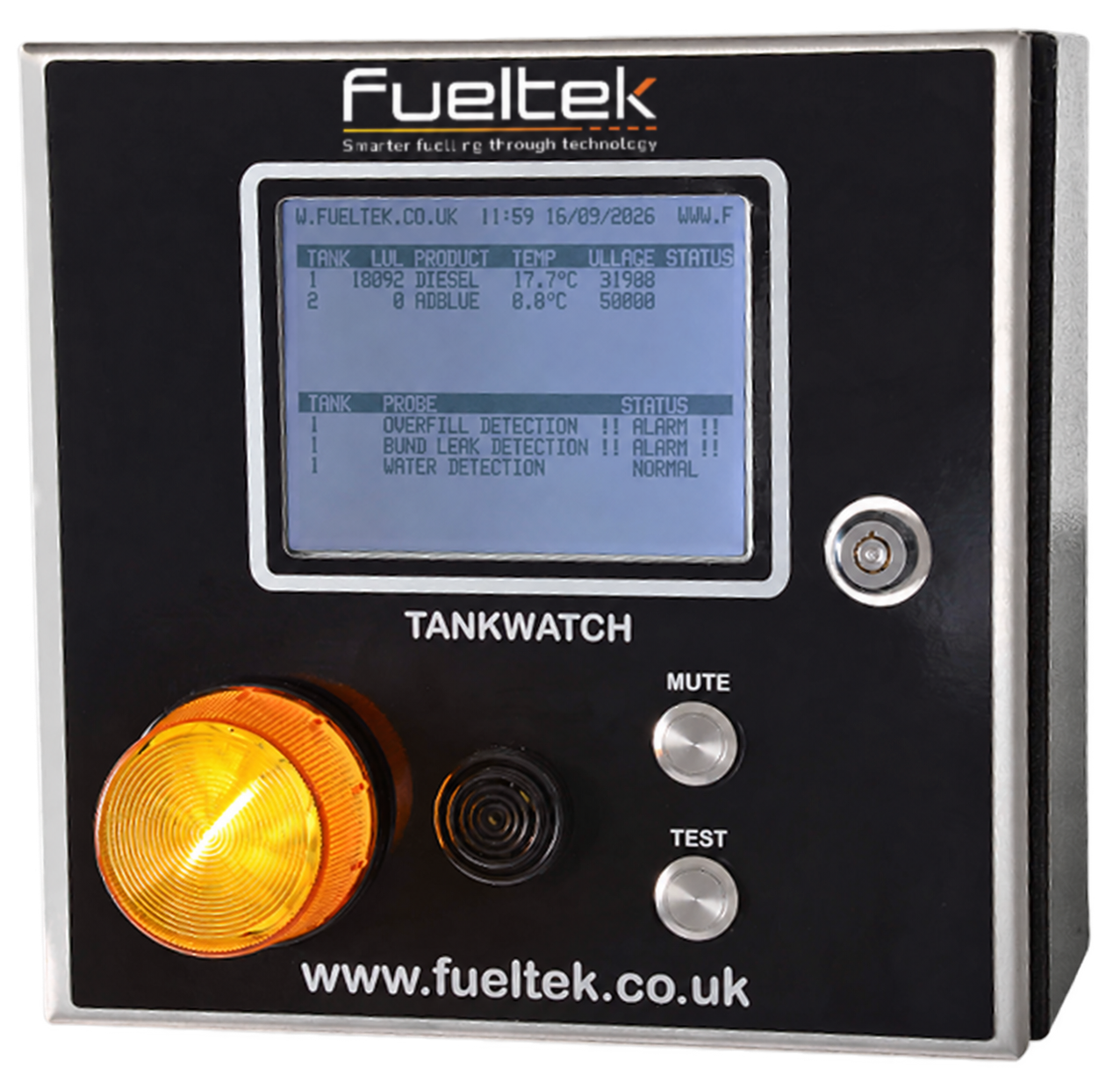
Independent tank-level and stock monitoring
TankWatch measures what is physically held in the storage tank using tank probes and a local control layer. That gives the operator information such as current stock, available capacity, deliveries, stock movements and throughputs. It complements pump transaction data because it answers a different question: the pump records what the system says was dispensed, while tank monitoring measures what is actually happening in storage.
Explore TankWatch →Fuel management software
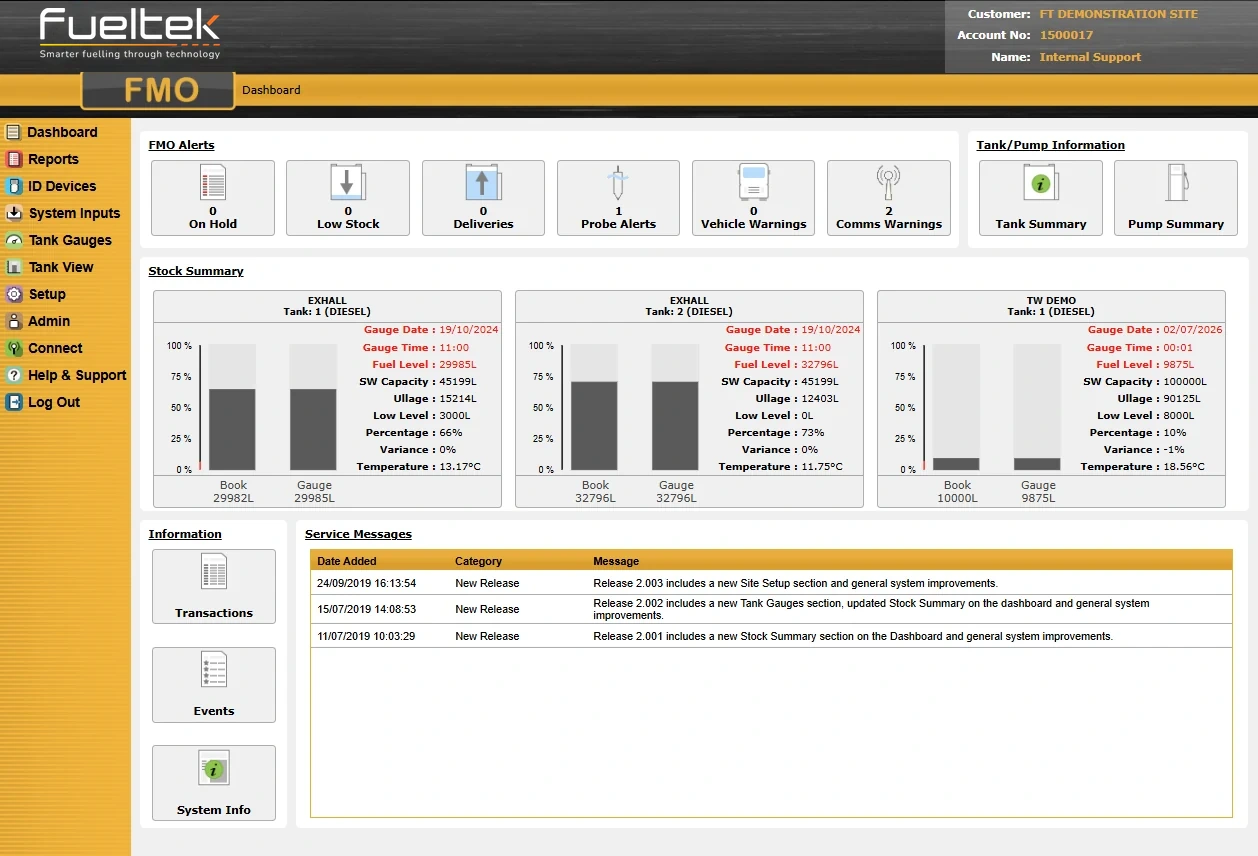
Browser-based reporting and management
Fuel management software turns pump and monitoring data into information that can be reviewed away from the fuelling point. That can include transaction history, site activity and management actions, giving the organisation a more useful record than a standalone pump total. On a live operational site, the reporting layer is also what allows historic information to support reconciliation, handovers and investigations.
Explore Fuel management software →Project workflow
A clear cut-off. A working depot.
The handover used the existing systems and their records to distinguish responsibility before and after the agreed reporting boundary.
Define the reporting boundary
LNER required accurate reporting up to the agreed handover point. Hitachi required a clear starting point for subsequent fuel usage and charging.
Use the existing records
Transaction and stock throughput history from the FT4000 and TankWatch installations supported the changeover.
Coordinate the responsibility change
Access and ownership changes were coordinated so the records could be attributed to the correct organisation.
Keep fuelling in service
The underlying fuelling operations remained in service while the reporting responsibility passed to Hitachi.
Planning a similar project
What should be defined before specification.
The case-study equipment should not be copied blindly. A new installation needs to be sized and configured around the actual operation. These are the main questions We need to understand before choosing the appropriate hardware and software.
Fuel & storage
Which products are stored? What is the expected daily usage, peak usage, delivery frequency and reserve requirement? These answers influence tank capacity and whether multiple compartments are appropriate.
Vehicles & dispensing
Vehicle type, fill-point position, desired flow rate, hose reach and simultaneous fuelling demand determine the practical pump, hose and nozzle arrangement.
Access & accountability
Define whether authorisation should be tied to a driver, vehicle, department, contractor or another operational identity, and what information needs to be captured with each transaction.
Tank visibility
Decide what the site needs to know about physical stock: current level, ullage, deliveries, movement, alarms and how that information should be reconciled with pump transactions.
Reporting & users
Identify who needs reports, whether the organisation is single-site or multi-site, which managers need local or central access and what exceptions should be easy to investigate.
Installation & handover
Existing equipment, electrical and data connections, vehicle movements, groundwork, commissioning windows, staff training and any fixed go-live date all affect the delivery plan.
Apply the learning
What to take into your own project.
For a similar handover, agree the reporting cut-off, the records each organisation needs and who will administer access afterwards. Those decisions should be settled before changing responsibility for a live fuel operation.
Read the project outcome →Case-study FAQ
Project detail and specification questions.
These answers separate the recorded facts of this case study from the decisions that would need to be made for a new installation.
What was the main issue this rail project needed to solve?
Separate responsibility without interrupting live fuelling. LNER needed accurate reporting up to the agreed handover point. Hitachi needed a clean starting point for subsequent fuel usage and charging.
Which Fueltek systems are connected with this case study?
This project brought together FT4000, TankWatch and Fuel management software. Each system has a distinct role in fuel control, storage, monitoring or reporting.
Why use both pump records and tank monitoring where both are installed?
They measure different parts of the operation. Managed dispensing records the authorised transaction at the pump, while tank monitoring measures physical stock and movements in storage. Reviewing both gives the operator more context than either source on its own.
Would a new project use exactly the same specification?
Not automatically. A similar project should be specified around fuel type, storage capacity, peak dispensing demand, hose reach, user and vehicle access, communications, reporting requirements, installation constraints and any existing equipment that is suitable to retain.
What should be defined before a site survey or quotation?
Useful starting information includes the products to be stored, approximate daily and peak usage, current tank and pump details, vehicle types, required flow rate, number of users or vehicles, preferred access method, reporting expectations, communications available at the site and any installation or handover deadline.
Project outcome
What changed.
The fuel-system ownership passed to Hitachi with a defined reporting boundary while the underlying fuelling operations remained in service.
Relevant Fueltek systems
Explore the technology used.
Equipment is specified around the site, fuels, users, reporting requirements and existing infrastructure. The links below show the closest current Fueltek product areas connected with this project.
Plan your own system
Have a similar operational challenge?
Fueltek can review your tanks, pumps, vehicles, users, reporting requirements and existing equipment before recommending the most practical route forward.