
Products guide
Planning for HVO, GTL and AdBlue
Confirm the fluid, equipment and vehicle requirements before changing a fuel installation.
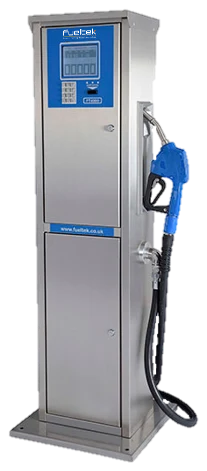
01Keep AdBlue separate
AdBlue is used by compatible selective catalytic reduction systems in the exhaust. It is not a diesel tank additive. Plan separate compatible storage, filling connections and dispensing equipment.
02Specify the exact fuel
HVO and GTL should be identified by the supplier’s actual product specification. Ask the vehicle or engine manufacturer and the equipment supplier to confirm suitability for the intended use.
03Review the complete wetted path
Check the tank, seals, pipework, meter, pump, hose and nozzle. A statement about one component does not establish compatibility of the whole installation or an older site.
04Plan the changeover
Agree how existing contents, cleaning, labelling and commissioning will be handled. Keep different products and their transaction records clearly identified.
05Use supported environmental claims
Do not assume all alternative fuels have the same origin or emissions performance. Any savings claim needs a defined fuel, lifecycle basis and supporting supplier evidence. AdBlue reduces relevant nitrogen-oxide emissions through SCR; it does not make an engine emission-free.
AdBlue® is a registered trademark of the VDA. Read the VDA’s AdBlue information.
Practical guidance
HVO, GTL and conventional diesel
Similar applications do not mean the fuels have the same feedstock or environmental profile.
| Product | What it is | What to establish |
|---|---|---|
| HVO | Hydrotreated vegetable oil is a paraffinic renewable diesel made by processing renewable feedstocks, which can include used cooking oil and animal fats. It is chemically different from FAME biodiesel. | Check the supplied product specification, feedstock/sustainability evidence and the engine manufacturer’s approval. . |
| GTL | Gas-to-liquids fuel is a paraffinic fuel produced from natural gas. Shell’s GTL fuel is FAME-free and specified to EN 15940. | It is not renewable simply because it is an alternative to conventional diesel. Check the actual product and relevant equipment approvals. . |
| Conventional diesel | Identify the delivered grade and blend from the supplier’s specification, including any biodiesel content. | Use the correct seasonal and application specification; review compatibility before changing products. |
A lifecycle greenhouse-gas claim needs a defined product and comparison. It is different from a claim about emissions at the vehicle exhaust. Neither HVO nor GTL makes a combustion engine emission-free.
Your site
Turn the requirement into a specification.
Discuss the equipment, information and support your operation needs.
Product information
One reporting platform for different energy sources
Our systems can monitor diesel, HVO and other biofuels, LPG, CNG and electricity used for vehicle charging. The connected equipment and system configuration determine how each source is recorded and brought into the reporting platform.